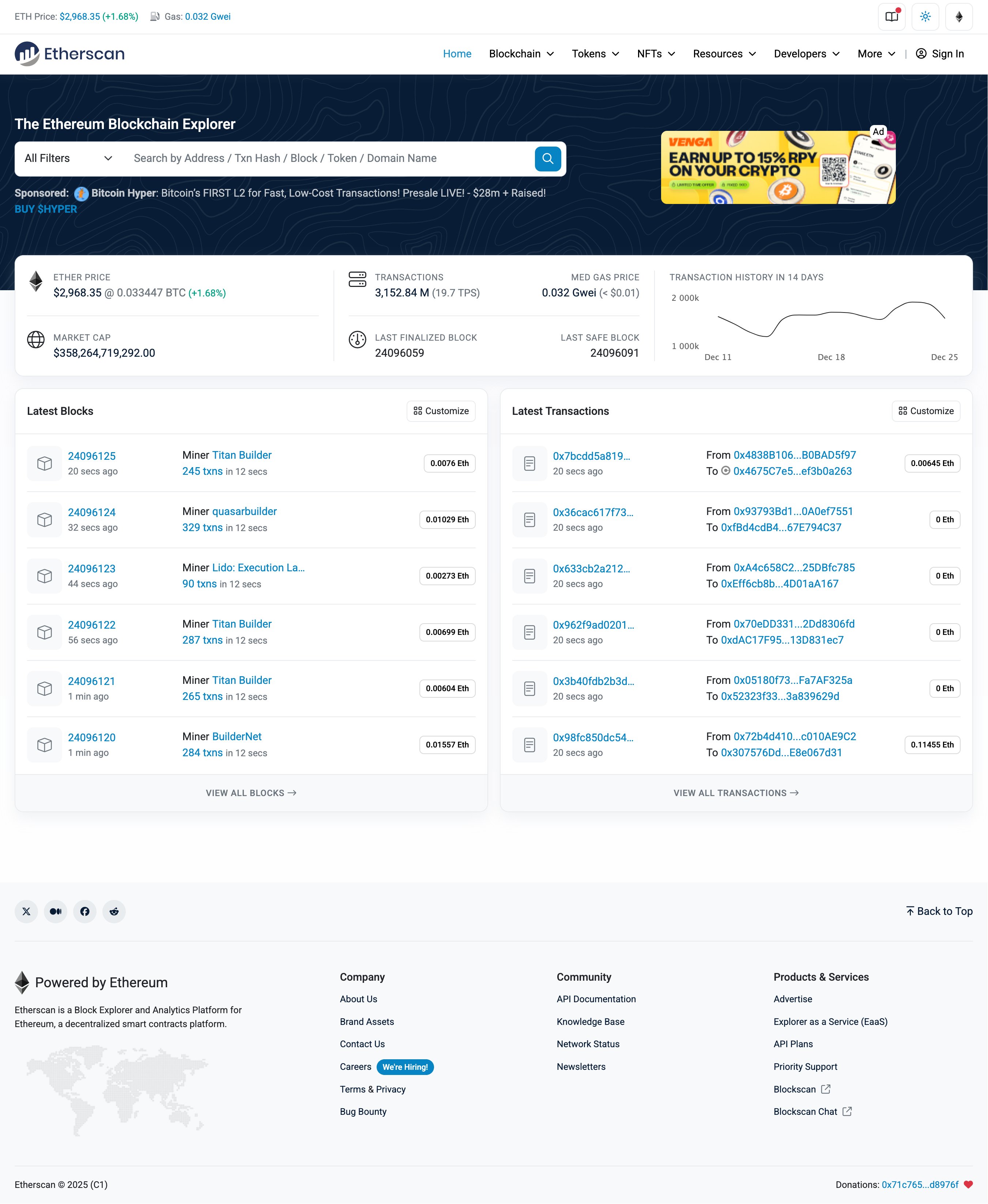
Etherscan is one of the most widely used tools in the Ethereum ecosystem. It is known as a blockchain explorer, which means it allows anyone to view and analyze activity on the Ethereum blockchain. Rather than storing cryptocurrency or making transactions, Etherscan helps users see what is happening on Ethereum in a transparent and organized way.
What Is Etherscan?
Etherscan is a web-based platform that provides real-time information about the Ethereum blockchain. Since Ethereum is a public blockchain, all transactions, wallet addresses, and smart contracts are visible to everyone. Etherscan collects this data and presents it in a readable, searchable format.
In simple terms, Etherscan is like a search engine for Ethereum. Just as Google helps you find websites, Etherscan helps you find blockchain data.
What Can You Do with Etherscan?
Etherscan offers many features that are useful for developers, students, and everyday users:
1. Track Transactions
Users can search for a transaction hash (also called a TXID) to see:
Whether a transaction is confirmed
How much ETH or tokens were sent
Transaction fees (gas fees)
The sender and receiver addresses
This is helpful when checking if a transaction went through successfully.
2. Explore Wallet Addresses
By entering an Ethereum wallet address, users can view:
ETH balance
Token holdings (such as ERC-20 or NFTs)
Transaction history
This feature highlights the transparency of blockchain technology—wallet activity is public, even though identities are usually anonymous.
3. View Smart Contracts
Ethereum supports smart contracts, which are self-executing programs on the blockchain. Etherscan allows users to:
Read contract code
See contract interactions
Verify whether a contract’s code matches what was deployed
This is especially important for developers and for understanding how decentralized applications (dApps) work.
4. Monitor Gas Fees
Etherscan shows current gas prices on the Ethereum network. Gas fees are the costs required to process transactions. By checking Etherscan, users can decide when network activity is lower and fees are cheaper.
5. Token and NFT Tracking
Etherscan supports:
ERC-20 tokens (fungible tokens)
ERC-721 and ERC-1155 tokens (NFTs)
Users can explore token supplies, holders, transfers, and contract details, making Etherscan a valuable research tool.
Why Is Etherscan Important?
Etherscan plays a major role in building trust and transparency in the Ethereum ecosystem. Because all data is public and verifiable, users do not have to rely on a single company or authority to confirm information.
Key benefits include:
Transparency: Anyone can verify transactions.
Education: Students and beginners can learn how blockchains work.
Security awareness: Users can inspect smart contracts and transaction histories.
Developer support: Developers use Etherscan to debug and analyze dApps.
Is Etherscan a Wallet?
No. Etherscan is not a wallet and does not store private keys or funds. It cannot send transactions on its own. It only displays blockchain data. To send or receive Ethereum, users need a wallet like MetaMask or a hardware wallet.
Who Uses Etherscan?
Etherscan is used by:
Students learning about blockchain technology
Developers building Ethereum applications
Researchers analyzing blockchain data
Everyday users checking transaction status
Because it is free and easy to use, it has become the go-to explorer for Ethereum.
Conclusion
Etherscan is a powerful and essential tool for understanding the Ethereum blockchain. By making complex blockchain data accessible and transparent, it helps users explore transactions, smart contracts, and tokens with confidence. Whether you are learning about blockchain for the first time or diving deeper into Ethereum technology, Etherscan provides a clear window into how decentralized systems operate.
How Etherscan Works
Etherscan does not control or run the Ethereum blockchain. Instead, it reads data directly from Ethereum nodes and organizes that information into a searchable interface. Every time a transaction is made, a smart contract is executed, or a block is added, Etherscan records the publicly available data and displays it in real time.
Because Ethereum is decentralized, Etherscan does not need permission from anyone to access this information. This design reflects one of blockchain’s core principles: open access to data.
Etherscan: Exploring the Ethereum Blockchain (Extended Article)
As blockchain technology continues to grow, tools that help people understand and verify blockchain activity become increasingly important. Among these tools, Etherscan stands out as one of the most trusted and widely used blockchain explorers for the Ethereum network. It plays a key role in improving transparency, accountability, and accessibility within decentralized systems.
Understanding Blocks on Etherscan
Ethereum transactions are grouped into blocks, which are added to the blockchain by validators. On Etherscan, users can explore each block to see:
Block number and timestamp
Number of transactions included
Gas used and gas limit
Validator (block proposer) information
This feature helps users understand how Ethereum processes transactions and maintains its ledger.
Etherscan and Ethereum Tokens
Ethereum supports thousands of tokens built on top of its network. Etherscan provides detailed insights into these tokens, including:
Total token supply
Number of holders
Transfer activity
Token contract addresses
This information is useful for research and analysis, especially when studying how tokens are distributed or used.
Etherscan for Developers
For developers, Etherscan is more than just a tracking tool—it is a development and debugging resource. Developers use Etherscan to:
Verify smart contract source code
Read and interact with deployed contracts
Analyze failed transactions and error messages
Monitor contract usage and performance
Verified contracts allow users to read the actual code behind an application, increasing trust and reducing the risk of hidden behavior.
Security and Scam Awareness
Etherscan helps users identify potential risks in the Ethereum ecosystem. By reviewing transaction histories and smart contract details, users can:
Spot suspicious wallet activity
Identify fake or copied token contracts
Avoid interacting with unverified or malicious contracts
Etherscan also labels known scam addresses and phishing contracts when possible, which helps protect users from common blockchain scams.
Etherscan APIs and Advanced Tools
Etherscan provides Application Programming Interfaces (APIs) that allow developers and researchers to programmatically access Ethereum data. These APIs are used for:
Building analytics dashboards
Tracking wallet activity
Studying network trends
Supporting decentralized applications
Additionally, Etherscan includes advanced tools such as:
Internal transaction tracking
Event logs
Contract interaction tools
These features support deeper technical analysis.
Etherscan and Ethereum Test Networks
Etherscan supports multiple Ethereum testnets such as Sepolia and Goerli. Testnets allow developers to experiment with smart contracts without using real ETH. Etherscan testnet explorers function the same way as the main site, making them ideal for learning and testing.
Limitations of Etherscan
While Etherscan is powerful, it does have limitations:
It does not show private or off-chain data
It cannot reverse or fix transactions
It relies on correct interpretation by users
Understanding blockchain data still requires some technical knowledge, especially for complex smart contracts.
The Role of Etherscan in Decentralization
Etherscan contributes to decentralization by making blockchain data accessible to everyone. It reduces reliance on centralized institutions and allows users to independently verify information. Although Etherscan itself is a centralized service, the data it displays comes from a decentralized network, balancing usability and openness.
Conclusion
Etherscan is an essential gateway to understanding Ethereum. It transforms raw blockchain data into meaningful insights, supporting education, development, and transparency. As Ethereum continues to evolve, tools like Etherscan will remain critical for navigating and verifying decentralized systems.

No Code Website Builder